Window & Door Guide › Doors › Storm Doors
The Castle Difference · Storm Doors
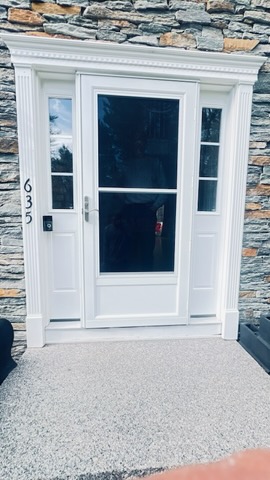
An outer door that protects your entry door from weather and lets in a breeze.
Parts
How it works
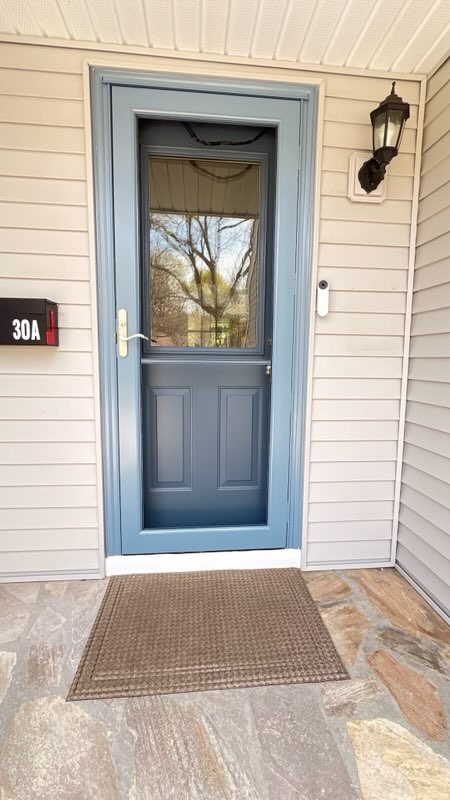
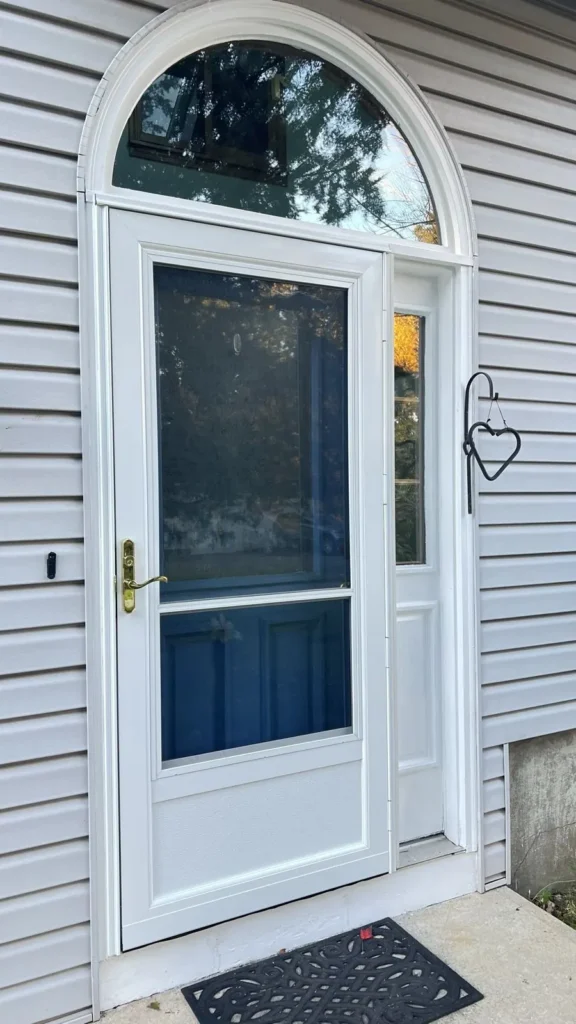
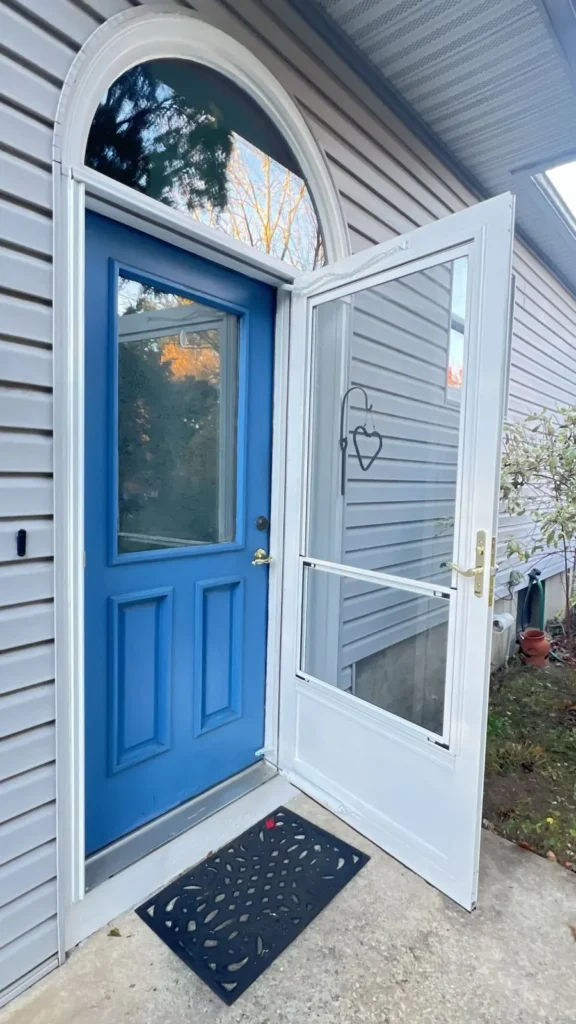
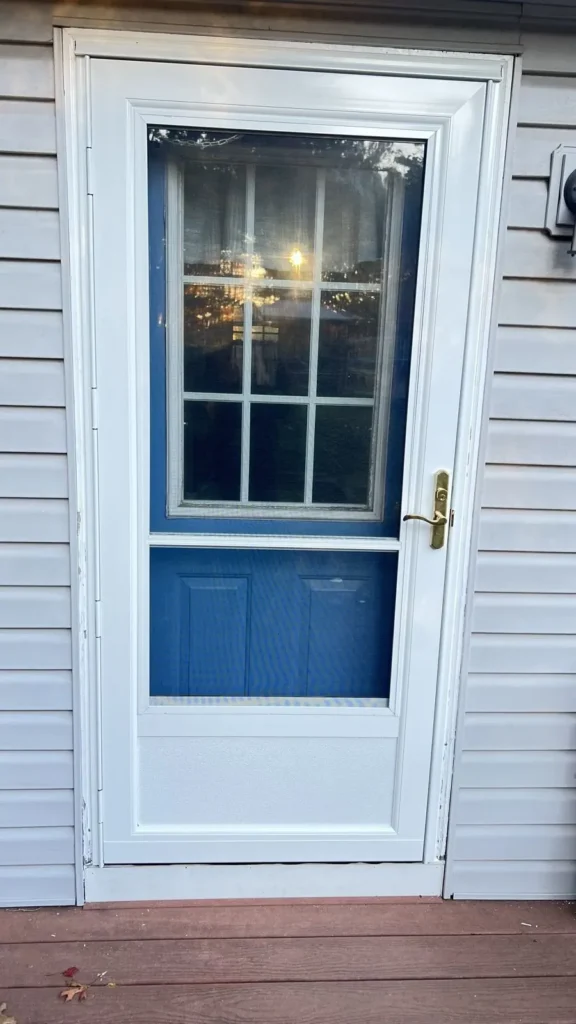
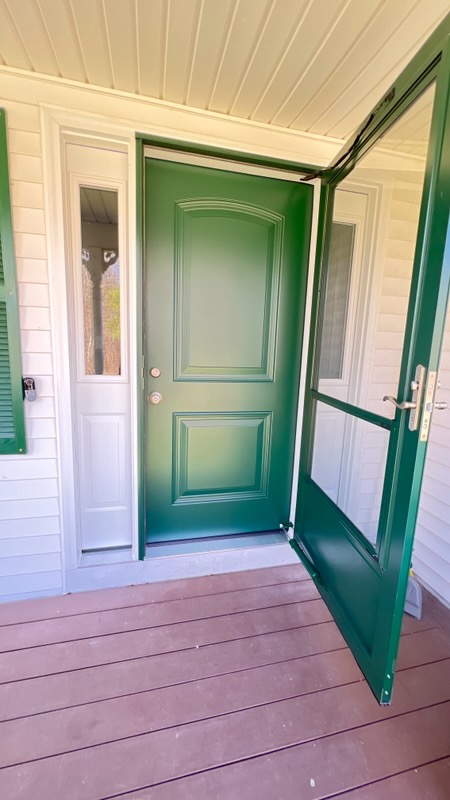
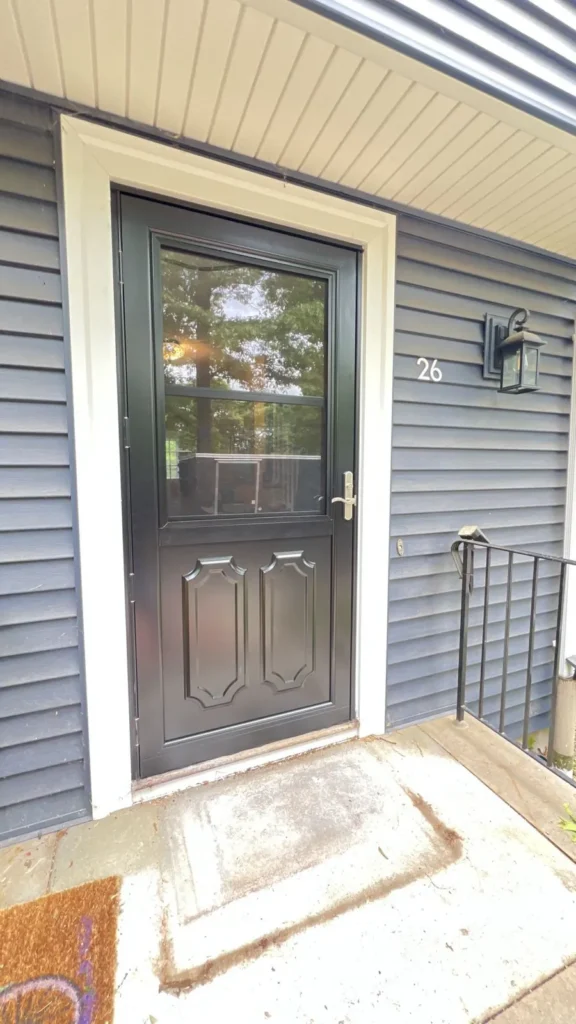
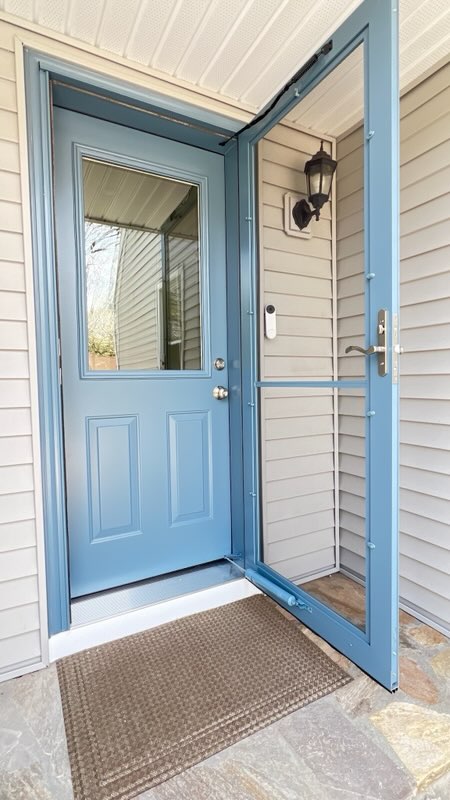
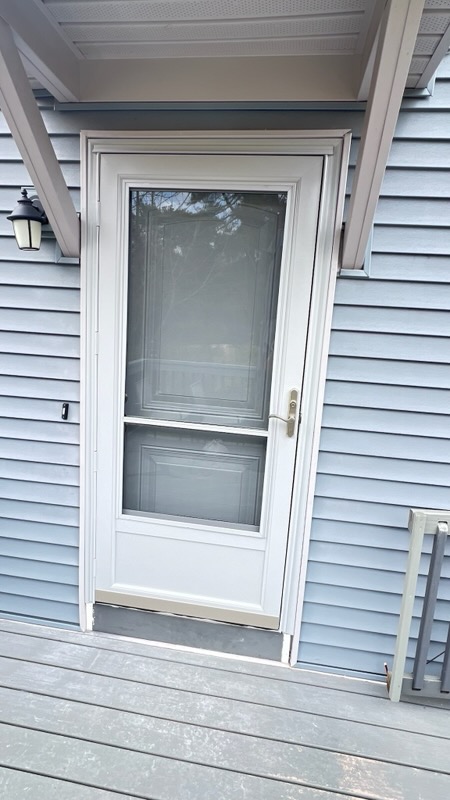
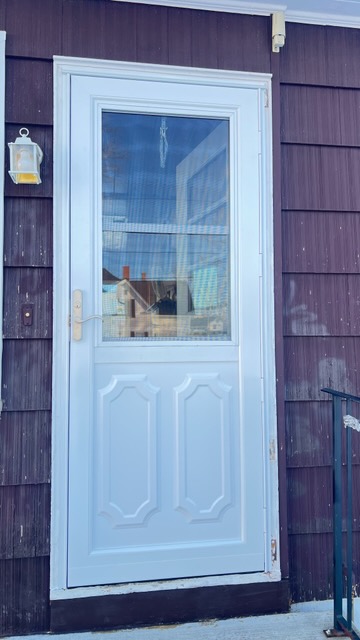
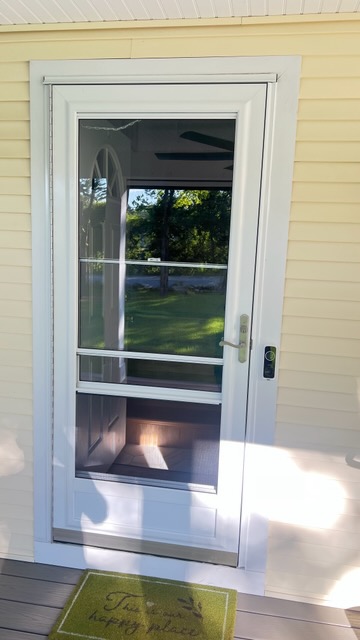
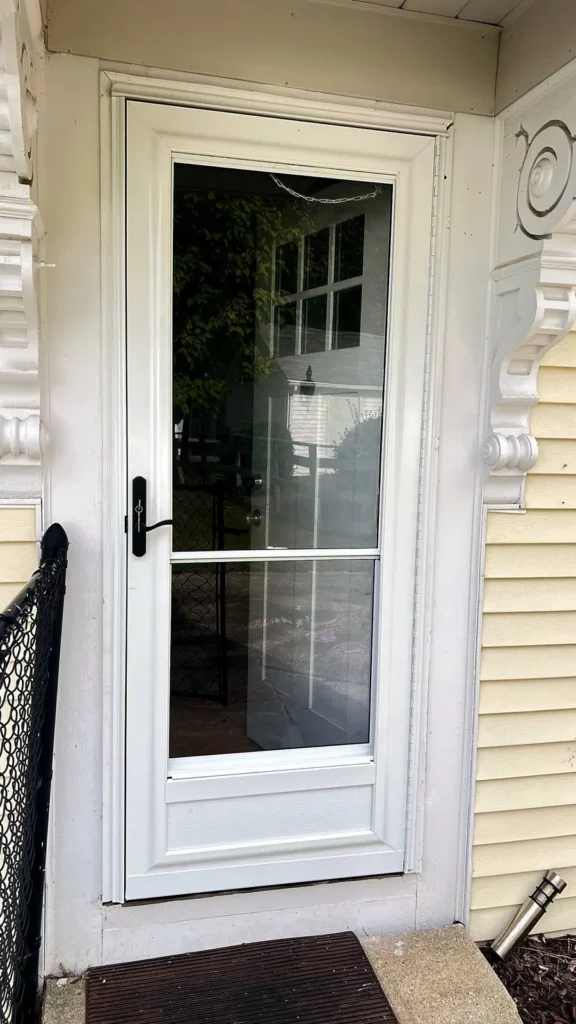
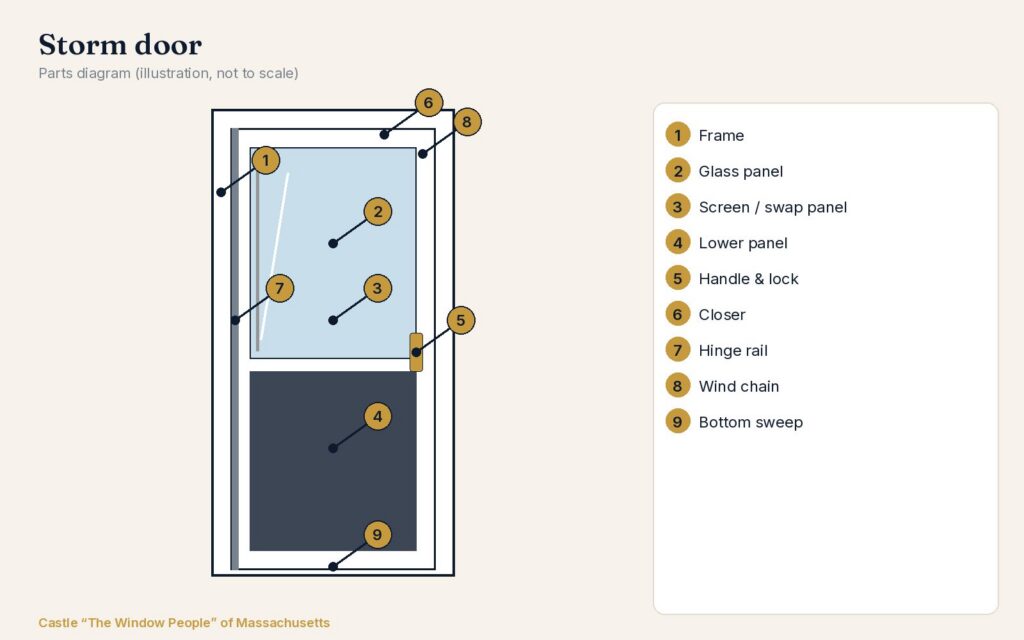
A storm door mounts in front of your entry door. Many have glass and screen panels you can swap or slide by season. A closer pulls it shut gently, and a sweep seals the bottom.
Front and back entries.
High-end vs. lower-end
Two windows can look alike on day one. The differences show up in year five, ten and twenty. Here’s what to look for, and why it matters.
| High-end: what to look for | Lower-end: what you may get | Why it matters | |
|---|---|---|---|
| Closer | Smooth closer | Slams or doesn’t latch | You use it every day |
| Sweep and weatherstripping | Tight sweep | Gaps | Keeps wind and water out |
| Frame | Rigid frame | Flexes | A flexing door won’t latch well |
| Glass (if any) | Insulated glass; ENERGY STAR certified options are available | Basic glass | Glass is where a door loses the most heat |
Where a row says “what to look for,” ask any company (including us) to show you the spec in writing.
| What you get | Why it matters | |
|---|---|---|
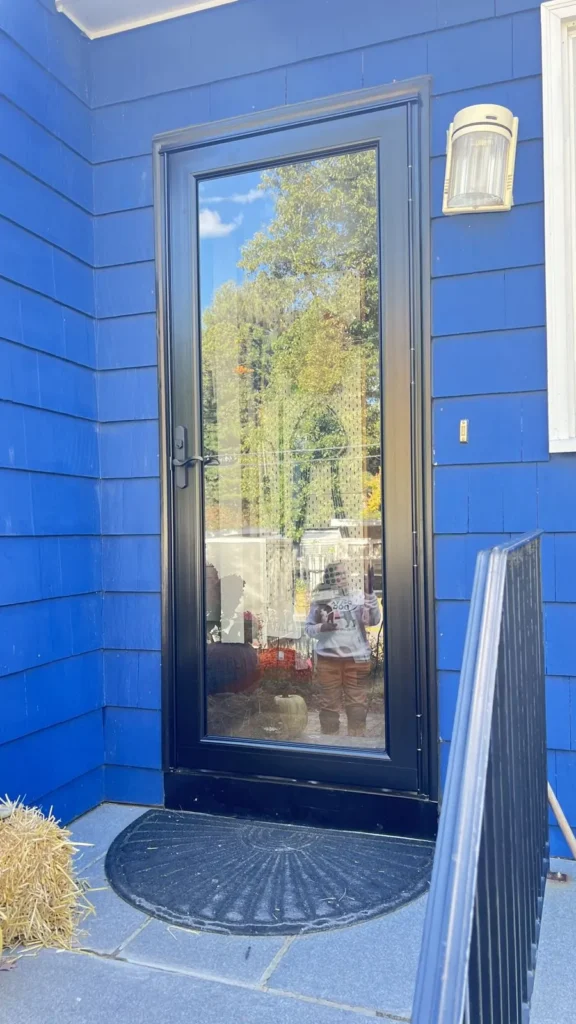
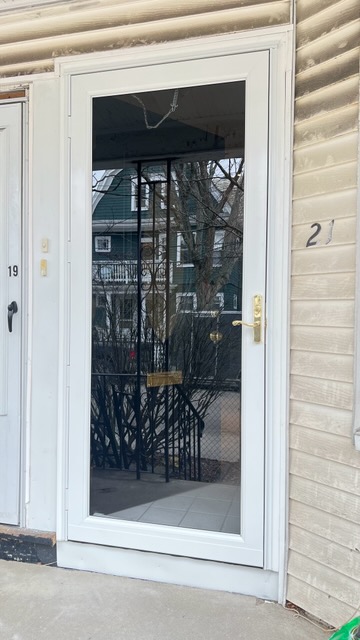
| Full-view glass | A large clear panel that shows off your entry door | Maximum daylight and curb appeal when the weather is mild |
| Screen option | Swap or self-store to screen for airflow | Ventilation in warmer months without leaving the entry open |
| Closer and latch | Adjustable closer and solid latch hardware | The door should shut firmly every time, even in wind |
| Color match | Frame color chosen to work with your entry and trim | Looks intentional, not like an add-on |
| Permit | Storm-door-only jobs usually don’t need a building permit | Faster path when you’re only adding a storm door |
Storm doors sit in front of your entry door to cut drafts, add a screen option and protect the finish. They are a different product from insulated entry or patio doors, so ENERGY STAR’s insulated-door glass-package table doesn’t apply the same way. Castle pulls building permits for window and door installs; storm-door-only jobs usually don’t need one. Ask us at your free estimate which storm-door style fits your opening and how it works with your entry door.
We bring samples to your free in-home estimate and give you a written price. No pressure.
Upgrades & add-ons
Every upgrade has a benefit and a trade-off. For most of them, the main downside is simply extra cost.
| Upgrade | What it does | Downsides | Our plain-English verdict |
|---|---|---|---|
| Self-storing glass and screen | Glass and screen panels store in the frame so you can switch between view and ventilation without carrying panels to the basement. | Slightly more hardware in the frame; extra cost vs a basic full-view door. | The most convenient setup for most Massachusetts homes that want summer airflow. |
| Full-view glass | Shows nearly the whole entry door and brings in more light. | Less privacy unless your entry door itself has privacy glass or you add a screen later. | Best when curb appeal and light matter most. |
| Heavy-duty closer | Helps the door shut firmly in wind and keeps it from slamming. | Needs occasional adjustment. | Worth it on windy exposures and busy entries. |
| Color and hardware finish | Frame and handle finishes that match your entry and trim. | Custom colors may cost more or take longer. | Pick finishes that look like they belong with the entry door. |
Do I need a storm door if I’m replacing my entry door? Not always. A well-sealed steel or fiberglass entry door already blocks weather. A storm door adds a screen option, extra draft control and finish protection—especially useful on busy or windy entries. Storm-door-only jobs usually don’t need a building permit. We’ll tell you honestly whether one is worth it for your opening.
Permit note is from Castle’s standard practice for storm-door-only work. Always confirm with your town if you’re unsure.
We’ll tell you honestly, room by room, at your free estimate.
Installation
A storm door is only as good as its install. A window that isn’t set level, square and sealed can stick, leak air or let water in, no matter how good the glass is. That’s why we go the extra mile on every opening, and why we can back the job with the Castle Lifetime Guarantee.
Most of our work is insert replacement: the new window goes into your existing frame and your trim stays. We only recommend full-frame replacement when the old frame is damaged.
Each window or door is made to the size of your opening.
We pull the building permit for window and door installs.
We protect the area and broom-clean every day.
If we find rot on the frame where the new window will sit, we fix it free.
Set perfectly level and square, insulated with spray foam and sealed with silicone caulk inside and out.
You look over the work and we haul the old units away.
Delivery-day checklist
Keep your contract handy and check these before the stickers come off. If anything doesn’t match, tell us before we install.
| Check | What to look for |
|---|---|
| Fit in the opening | The storm door should sit square in the storm frame with even gaps and no binding. |
| Closer and latch | The closer should pull the door shut firmly; the latch should catch cleanly every time. |
| Glass and screen panels | Panels should slide or store smoothly and seat fully in their tracks. |
| Color and hardware | Frame color and handle finish should match your order and look right next to the entry door. |
| Sweep and weatherseal | Bottom sweep and side seals should touch evenly without big gaps. |
| Clearance | Confirm the storm door doesn’t hit the entry handle, storm chain or porch trim when both doors are open. |
The NFRC label lists U-factor (lower keeps more heat in), SHGC and other ratings. NFRC · ENERGY STAR buying tips
Castle Lifetime Guarantee
Guarantee vs. warranty, in one breath: many window and door warranties are the manufacturer’s limited promise on the product only, with fine print that can leave out labor, shrink over time or stop when the house is sold. The Castle Lifetime Guarantee is Castle’s own promise on the whole job: anything that goes wrong with the window or door, whether it’s install-related or a manufacturing defect or failure, plus accidental glass breakage, and it transfers to the new owner when you sell. See the full comparison.
Related styles
Your front door handles weather, security and first impressions. Here’s what’s inside one.
A big glass door that glides open to your deck or yard and locks tight.
The classic New England window. Both sashes slide up and down, and both tilt in so you can clean the outside glass from inside.
Storm-door-only jobs don’t need a building permit.
They add a layer at the doorway; the entry door’s own seals matter most.
Anything that goes wrong with a window or door we install, whether it’s install-related or a manufacturing defect or failure, plus accidental glass breakage. It transfers to the new owner when you sell.
Someone from our team will reach out by text, email, or phone by the next business day.
Start your project
We’ll measure, show you real options and give you a written price. Someone from our team will reach out by text, email, or phone by the next business day.
Call us (508) 425-4977
Email customerservice@setrocllc.com
No cost · No pressure
Free in-home estimate
Takes 30 seconds. Someone from our team will reach out by text, email, or phone to set a time.
We never share your info. Licensed & insured, MA HIC #200323.