Window & Door Guide › Windows › Bay
The Castle Difference · Bay
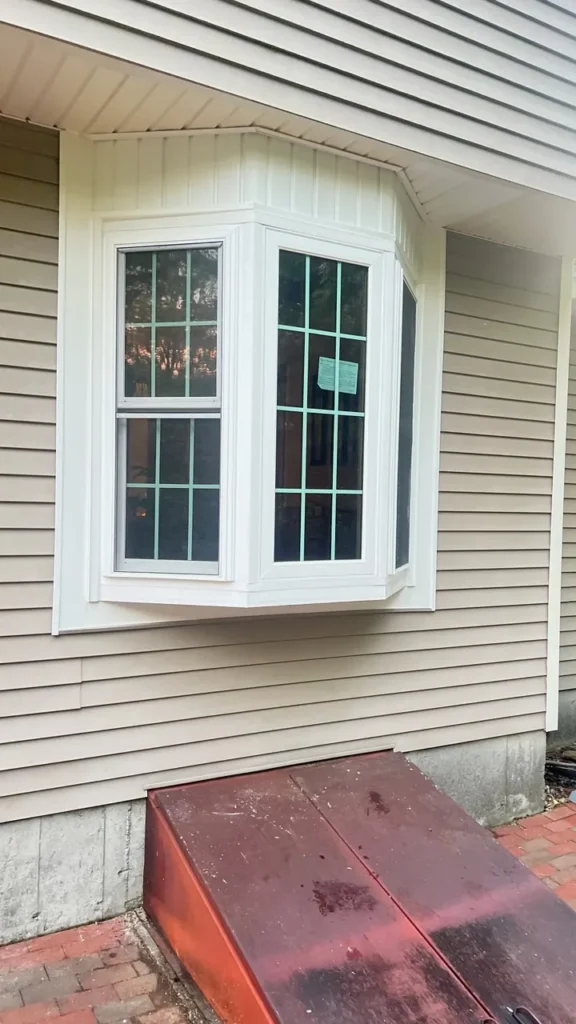
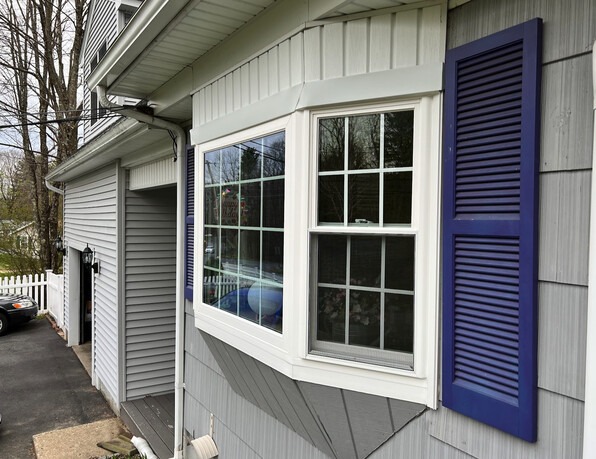
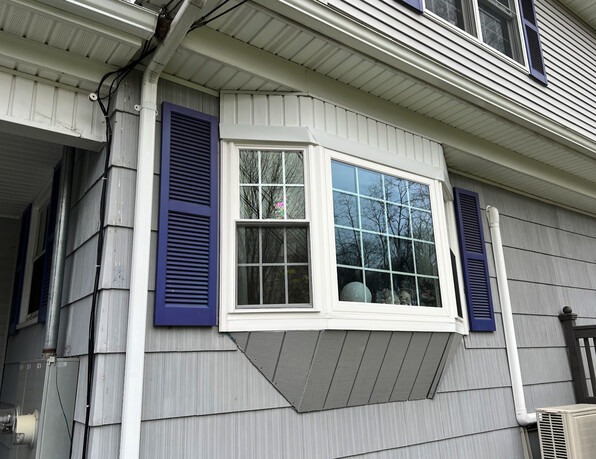
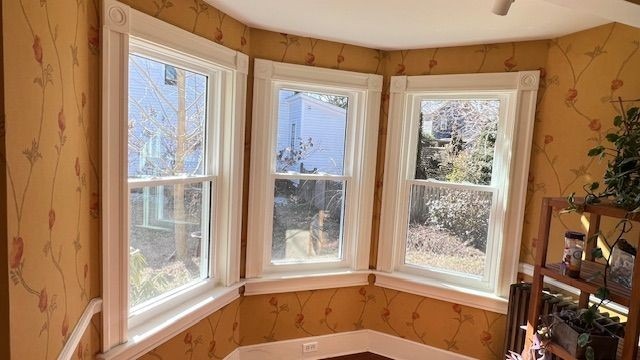
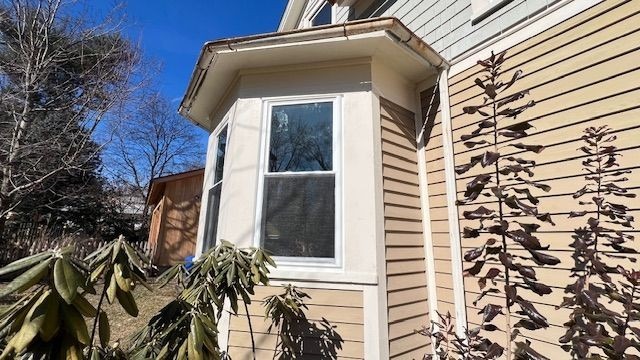
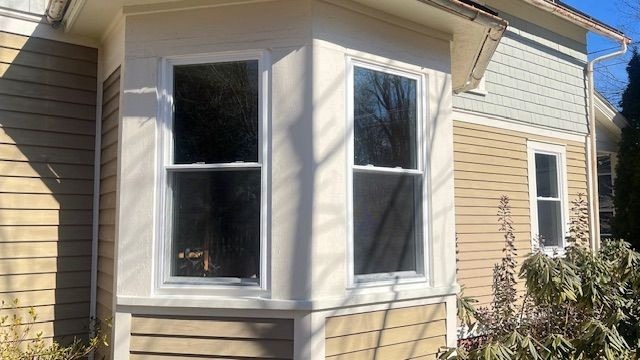
Three windows set at angles to project out from the wall, for more light, a wider view and a little extra room.
Parts
How it works
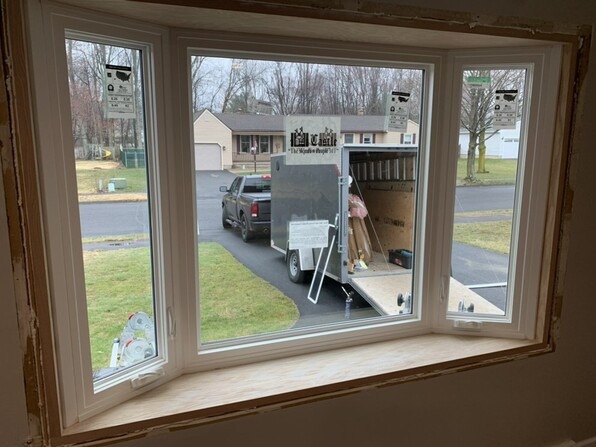
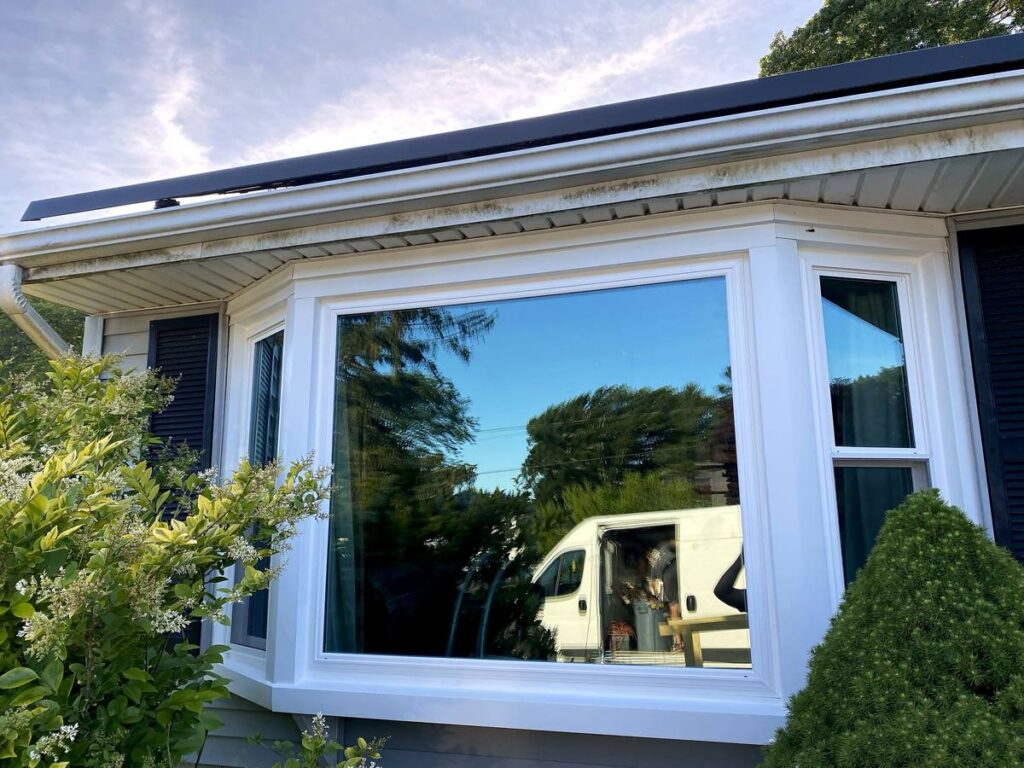
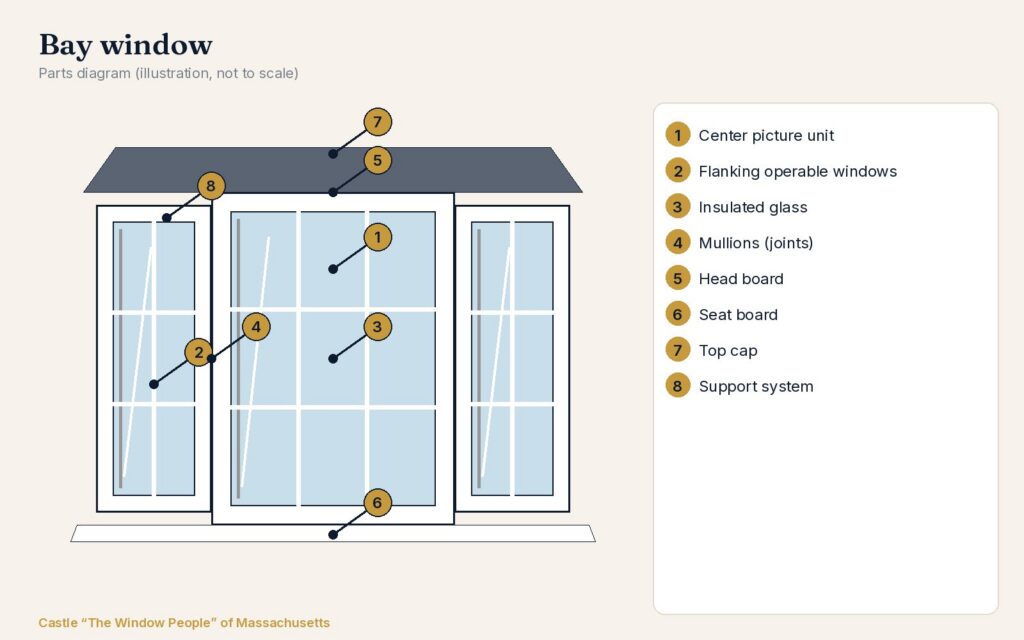
A bay is usually a large center window with two angled side windows, built as one unit that projects out from the house. The sides are often double-hungs or casements so you can get air. A head board, seat board, top cap and support system finish it.
Living rooms, dining rooms and front rooms where you want light and curb appeal.
High-end vs. lower-end
Two windows can look alike on day one. The differences show up in year five, ten and twenty. Here’s what to look for, and why it matters.
| High-end: what to look for | Lower-end: what you may get | Why it matters | |
|---|---|---|---|
| Frame material | Vinyl that never needs painting (all Castle windows are vinyl) | Vinyl varies a lot in thickness and build | Better-built vinyl stays straight and sealed |
| Support | Properly supported projection | Sagging over time | A bay is heavy |
| Joints | Sealed mullions | Leaky joints | Every joint is a possible leak |
| Seat and head boards | Insulated, finished boards | Thin boards | They’re part of the wall now |
| Glass package | Up to Castle’s top package: triple-pane with krypton, built to meet ENERGY STAR Northern-zone requirements | Basic double-pane glass | The glass is most of the window |
Where a row says “what to look for,” ask any company (including us) to show you the spec in writing.
| Good | Better | Best: Castle’s top package | |
|---|---|---|---|
| Glass layers | Double pane | Triple pane | Triple pane |
| Gas between panes | Argon | Argon | Krypton |
| Low-E coating | Triple-layer silver Low-E | Triple-layer silver Low-E | Triple-layer silver Low-E |
| Performance target | Ask for the NFRC label on your quote | Ask for the NFRC label on your quote | Built to meet ENERGY STAR Northern-zone requirements* |
| Main trade-off | Lowest cost | Middle cost; heavier sash | Highest cost; heavier sash |
*ENERGY STAR Version 7.0 Northern-zone criteria for windows: U-factor ≤ 0.22 with SHGC ≥ 0.17 (or an equivalent-energy option of U-factor 0.23–0.26 with a higher SHGC), and air leakage ≤ 0.3 cfm/ft². Massachusetts is in the Northern zone. Sources: ENERGY STAR window criteria, climate zone map. ENERGY STAR certified options are available; ask which models are certified when we quote. Castle offers double-pane and triple-pane glass with argon or krypton gas fill. Every tier includes a triple-layer silver Low-E coating that blocks about 95% of the sun’s UV rays and much of its heat while still letting daylight through. Castle window frames and sashes are fusion-welded at the corners (heat-fused into one permanent joint instead of screwed together) and ordered with foam-filled frame and sash chambers. Your quote lists the exact package and its NFRC label numbers.
We bring samples to your free in-home estimate and give you a written price. No pressure.
Upgrades & add-ons
Every upgrade has a benefit and a trade-off. For most of them, the main downside is simply extra cost.
| Upgrade | What it does | Downsides | Our plain-English verdict |
|---|---|---|---|
| Triple-pane glass | A third pane adds another insulating layer. It helps most in cold, exposed rooms and with outside noise. | Heavier sash, thicker glass edge and a slightly lower amount of light and solar heat coming through. The main downside is extra cost. | Worth it for the coldest, windiest or noisiest rooms, or if you want the best package. Many Massachusetts homes do fine with a good double-pane package, so it isn’t a must. |
| Krypton gas fill | Krypton insulates better than argon, and it works best in narrow gaps like those in many triple-pane units. | Costs more than argon. In a typical double-pane gap the gain over argon is smaller. | Makes the most sense paired with triple-pane, which is how Castle’s top package uses it. |
| Argon gas fill | A low-cost gas that insulates better than plain air. | Very little; it’s the common baseline in energy-efficient glass. | A sensible standard for most windows. |
| Foam warm-edge spacer | A non-metal foam spacer at the glass edge cuts heat loss there and helps reduce condensation at the edge. Castle’s standard is a stainless-steel spacer; a foam warm-edge spacer is available. | Small extra cost. | Worth asking about for rooms where edge condensation has been a problem. |
| Foam-filled frame and sash chambers | Insulating foam inside the hollow frame and sash chambers. | None for you: Castle includes it on its windows. | Already part of Castle’s standard order. If you shop elsewhere, ask whether it’s included. |
| Grids between the glass | Grids sealed between the panes give a divided-light look and never need dusting. Contoured grid profiles are available. | Can’t be removed; some people prefer an open view. Extra cost. | Pick them for the look you want. Castle offers between-the-glass grids, including contoured profiles. |
| Obscure (privacy) glass | Lets light in while blurring the view. Great for bathrooms. | Blocks the view; extra cost. | Castle offers obscure glass for bathrooms and anywhere privacy matters. |
| Exterior and interior colors | Castle offers exterior and interior colors, so the window can match your house outside and your trim inside. | Extra cost and longer lead time. | Worth it when the window is a big part of the room’s look or the house’s curb appeal. |
Is triple-pane with krypton necessary for a typical Massachusetts home? Not always. A good double-pane window with low-E and gas fill performs well for most homes. Triple-pane with krypton is Castle’s top package for homeowners who want the best insulation, especially in exposed, cold or noisy rooms. The main downside is extra cost, plus heavier glass.
Sources: US DOE, Guide to Energy-Efficient Windows · US DOE Building America window guideline · National Glass Association on gas fills and gap width.
We’ll tell you honestly, room by room, at your free estimate.
Installation
A bay window is only as good as its install. A window that isn’t set level, square and sealed can stick, leak air or let water in, no matter how good the glass is. That’s why we go the extra mile on every opening, and why we can back the job with the Castle Lifetime Guarantee.
Most of our work is insert replacement: the new window goes into your existing frame and your trim stays. We only recommend full-frame replacement when the old frame is damaged.
Each window or door is made to the size of your opening.
We pull the building permit for window and door installs.
We protect the area and broom-clean every day.
If we find rot on the frame where the new window will sit, we fix it free.
Set perfectly level and square, insulated with spray foam and sealed with silicone caulk inside and out.
You look over the work and we haul the old units away.
Delivery-day checklist
Keep your contract handy and check these before the stickers come off. If anything doesn’t match, tell us before we install.
| Check | What to look for |
|---|---|
| Angles and units | Count the units, check the side windows’ style and the projection angle. |
| Seat board | Check its finish matches your order. |
| Labels and stickers | Before the stickers come off, read the label on the glass. Many windows carry an NFRC label with U-factor and SHGC. Compare those numbers with what your contract lists. |
| Glass edge (spacer) | Look at the strip between the panes along the edge of the glass. Its color and type should match what you were shown. |
| Number of panes | Look at the glass edge from an angle: two panes show two reflections; triple-pane shows three. |
| Gas and low-E markings | Gas fill and low-E coatings are invisible. Check the label or paperwork for them; a sticker or etched code on the glass often identifies the glass package. |
| Grids | Check the grid pattern, the profile (flat or contoured) and whether they sit between the glass, as ordered. |
| Color and finish | Check the inside and outside color and any woodgrain finish against your order. |
| Size and fit | The window should fill the opening evenly with tidy, sealed gaps, not big filler strips. |
| Screen | Make sure the screen is there, fits snugly and matches the frame color. |
The NFRC label lists U-factor (lower keeps more heat in), SHGC and other ratings. NFRC · ENERGY STAR buying tips
Castle Lifetime Guarantee
Guarantee vs. warranty, in one breath: many window and door warranties are the manufacturer’s limited promise on the product only, with fine print that can leave out labor, shrink over time or stop when the house is sold. The Castle Lifetime Guarantee is Castle’s own promise on the whole job: anything that goes wrong with the window or door, whether it’s install-related or a manufacturing defect or failure, plus accidental glass breakage, and it transfers to the new owner when you sell. See the full comparison.
Related styles
Four or more windows set in a gentle curve. Softer than a bay, with a panoramic view.
One big fixed pane for the most light and the clearest view. Often flanked by windows that open.
The classic New England window. Both sashes slide up and down, and both tilt in so you can clean the outside glass from inside.
A bay usually has three windows at sharper angles; a bow uses four or more units in a gentle curve.
Yes. A bay projects from the wall and must be properly supported.
Anything that goes wrong with a window or door we install, whether it’s install-related or a manufacturing defect or failure, plus accidental glass breakage. It transfers to the new owner when you sell.
Someone from our team will reach out by text, email, or phone by the next business day.
Start your project
We’ll measure, show you real options and give you a written price. Someone from our team will reach out by text, email, or phone by the next business day.
Call us (508) 425-4977
Email customerservice@setrocllc.com
No cost · No pressure
Free in-home estimate
Takes 30 seconds. Someone from our team will reach out by text, email, or phone to set a time.
We never share your info. Licensed & insured, MA HIC #200323.